
Why Gutters Overflow During Heavy Rain
By Cameron ·
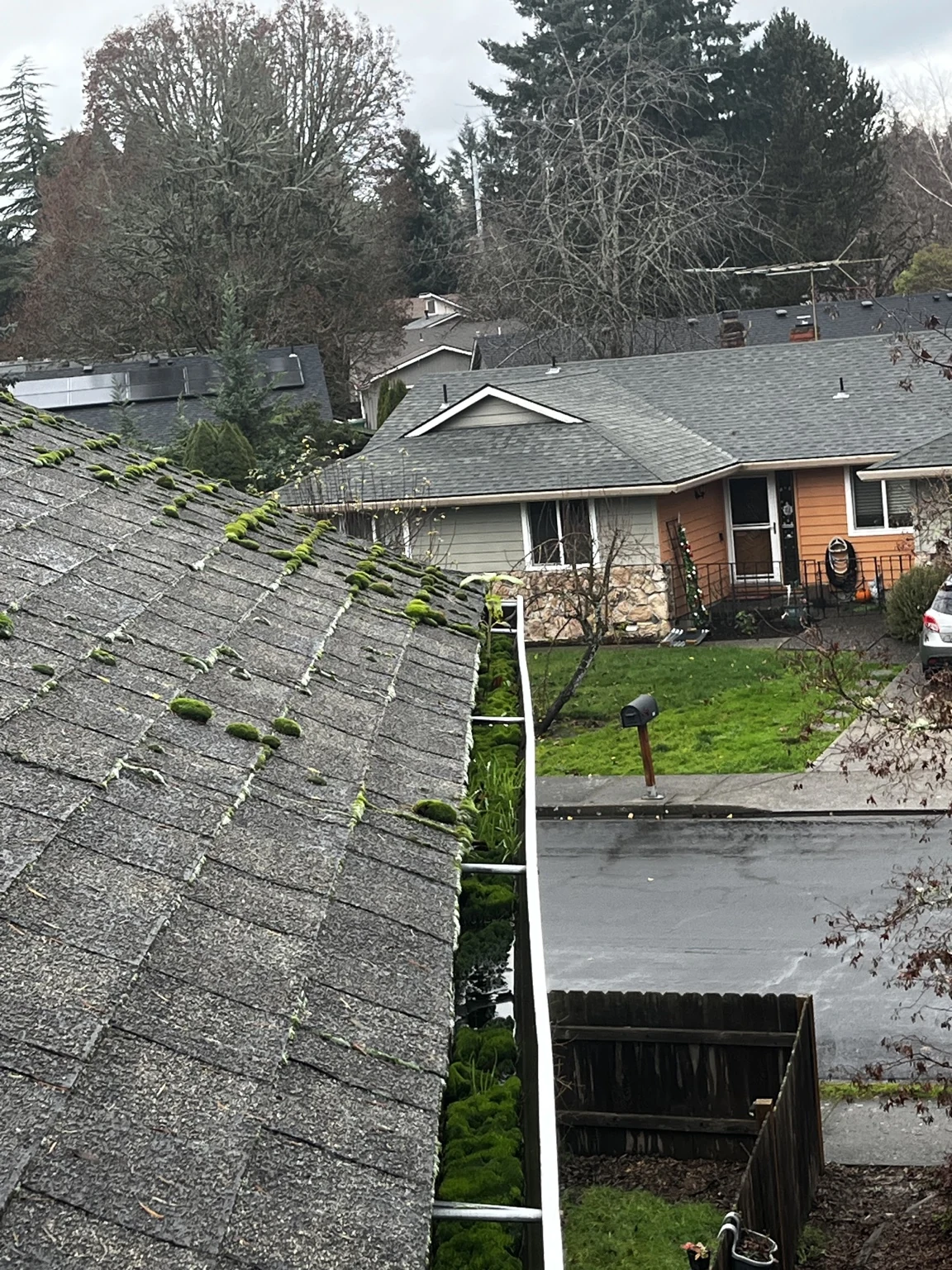
Gutters overflow heavy rain: Discover why gutters overflow in storms and how to diagnose the problem. Learn common causes and when to call a professional.
Table of Contents
- Why Gutters Overflow During Heavy Rain
- Debris Buildup and Clogged Gutters
- How to Fix Overflowing Gutters: A Diagnostic Approach
- Downspout Clogged Symptoms and Drainage Problems
- Gutter Capacity for Heavy Rain and Undersized Systems
- Gutter Slope Problems and Poor Installation
- When to Call a Professional and Prevent Future Overflow
- Frequently Asked Questions
Last Updated: October 13, 2026
Why Gutters Overflow During Heavy Rain
Gutters overflow during heavy rain when roof runoff arrives faster than the system can collect or drain it. Debris, blocked downspouts, sagging sections, outlet restrictions, and runoff that misses the gutter can all cause trouble. The right repair starts with watching where the water goes.
In Corvallis, Albany, Portland, Vancouver, and surrounding communities, wet weather gives small drainage problems plenty of opportunities to show themselves. Water spilling beside a doorway is an inconvenience; repeated wetting against siding, fascia, or the foundation deserves a closer look.
Debris Buildup and Clogged Gutters
Leaves, needles, twigs, moss fragments, roof sediment, and other debris can collect in a gutter or gather around its outlet. A narrow opening may pass light rain and then back up when runoff increases. A gutter that looks clear from the ground can still have a blocked outlet or a layer of compacted material inside.
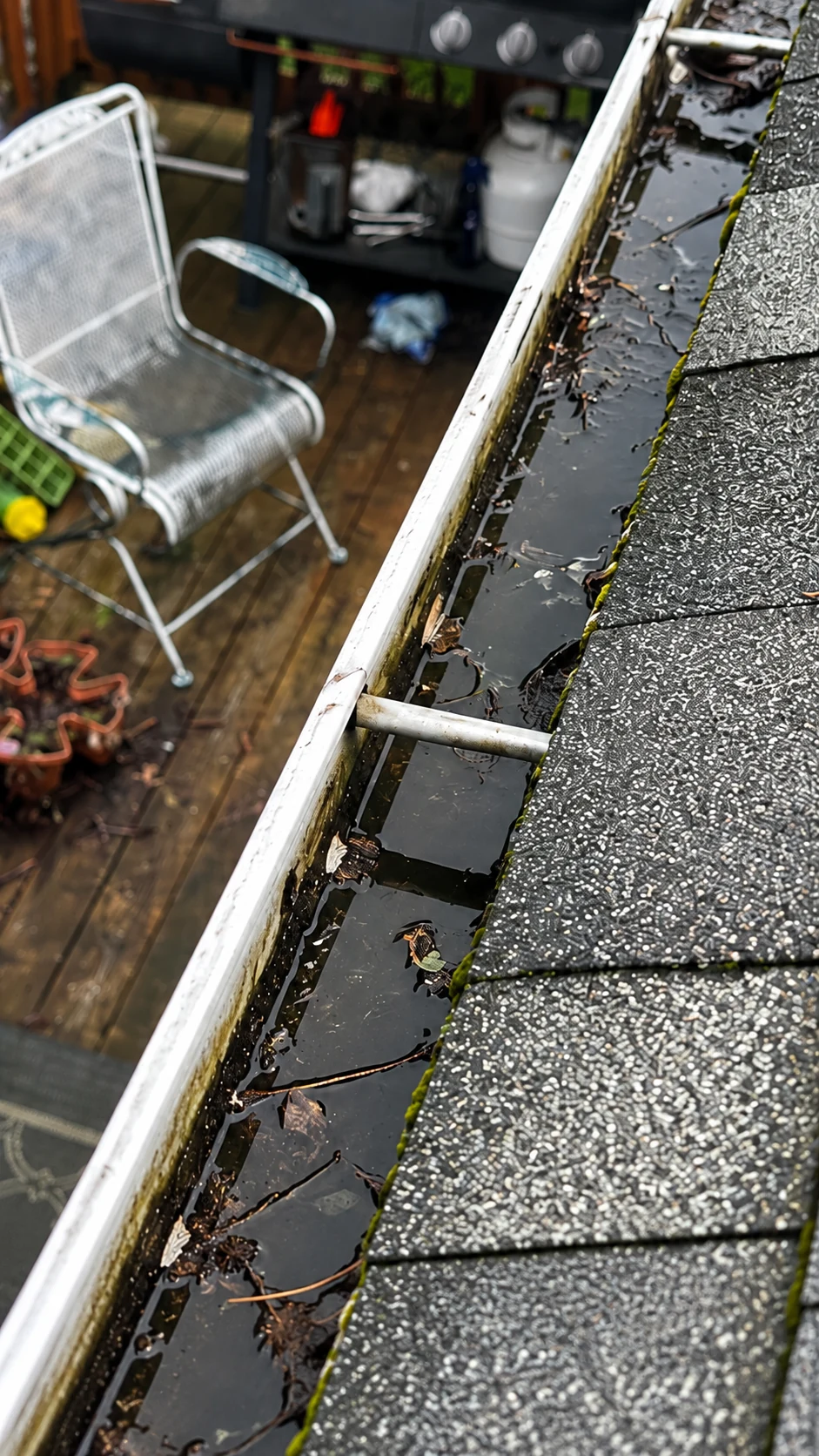 Standing water and debris inside a residential gutter.Cleaning should include the gutter channel, outlet, and downspout. Removing visible leaves without confirming where the water exits can leave the actual restriction in place.
Check gutter guards as well: debris can sit on top of a guard, collect at its edges, or accumulate beneath it.
Use spring and fall as maintenance checkpoints, then adjust the schedule to your property’s actual debris load. Nearby trees, roof conditions, and past blockages may justify more frequent cleaning.
How to Fix Overflowing Gutters: A Diagnostic Approach
Finding the cause starts with observing how water moves through the system. Is the gutter filling and spilling over, or is runoff passing over a gutter that still has room? Is the problem concentrated near a valley, a downspout, or a sagging section?
These patterns help narrow down what to inspect. Check debris, outlets, downspouts, gutter slope, and the final discharge route before deciding what needs repair.
Watch Out Do not climb during rain, wind, or icy conditions, and do not walk onto a wet roof to investigate overflow. Start with observations and photographs from a safe location on the ground. If closer inspection requires a ladder, use suitable equipment on firm, level ground and follow its safety instructions. Oregon OSHA provides guidance on ladder selection, setup, and safe use. Height, nearby electrical lines, deteriorated supports, or uncertainty about safe access are reasons to call a professional.
Step 1: Match the symptom to the cause
Watch from a sheltered, safe location on the ground during rain, provided conditions allow. Note where water spills and whether water is leaving the downspout at the same time. A short video can help show the pattern. The table below suggests what to check next; the symptoms alone do not confirm the cause.
| What you see | ** Possible cause** | ** Where to start** |
|---|---|---|
| Water spills over a gutter that is visibly full | Debris, a restricted outlet or downspout, poor drainage, or insufficient capacity | Check the gutter, outlet, downspout, and final discharge route. |
| Water spills over in one or two spots | A local blockage, sagging section, or slope problem | Inspect those sections and check drainage toward the outlet. |
| Water shoots past the front while the gutter appears partly empty | Concentrated runoff, gutter positioning, or a gutter-guard problem | Check where runoff reaches the gutter, especially below roof valleys. |
| Little or no water leaves the downspout while the gutter fills | A restriction in the outlet, downspout, or connected drain | Check accessible openings, elbows, and any connection to a buried drain. |
| The gutter sags and water collects in the middle | Loose supports, damaged fascia, or lost slope | Check the supports, fascia condition, and fall toward the outlet. |
| Water runs between the gutter and fascia | A roof-edge, flashing, or attachment issue | Have the roof-to-gutter connection evaluated. |
If the gutter and downspout are clear but runoff still shoots past the front, check how water reaches and enters the gutter. Roof valleys, gutter positioning, and guard performance can all contribute. If the gutter fills and spills instead, review the outlet, downstream drainage, slope, and capacity before deciding on a repair.
Step 2: Inspect safely from the ground first
Use binoculars or your phone’s zoom to look for visible debris, sagging sections, loose connections, fascia stains, and water streaks down the siding. Check accessible downspout outlets and note where the water discharges. Photos taken from the same position in dry weather and during rain can help show where the problem occurs. You do not need to climb a ladder to gather useful information for a gutter assessment.
Step 3: Clear debris if you can do so safely
If safe access is available, wear gloves and remove leaves, sediment, and other debris with a gutter scoop. Collect the material rather than pushing it into the downspout, where it could create another blockage. Check around the outlet and, where fitted, above and beneath gutter guards. Use a suitable ladder on firm, level ground, maintain three points of contact while climbing, and reposition it instead of reaching sideways. Follow ladder-safety guidance, and leave the work to a professional if access is uncertain.
Step 4: Test the downspout
Where safe access is available, use a controlled, low-pressure hose flow to check whether water enters the downspout and leaves its outlet freely. Stop if water backs up or begins running toward or into the building. A hose test can reveal restricted flow, but it does not reliably pinpoint the blockage.
Check accessible openings, elbows, and connections. If the downspout feeds an underground drain, determine whether the restriction is in the downspout or farther downstream. Persistent backup may require opening accessible connections or having the buried line investigated. If the cause remains unclear, request a drainage assessment.
Step 5: Check pitch with a level
The gutter should drain toward its intended downspout without unintended low spots. Check the installation requirements for the specific gutter system rather than relying on one slope measurement for every home.
Where safe access is available, a level can help identify localized slope problems, but a short level does not establish the fall of an entire run. Check for sagging sections, loose hangers, and damaged fascia, and observe whether water drains toward the outlet during a controlled flow test. Correcting the pitch may require rehanging the affected section and addressing its supports.
Step 6: Measure capacity
If the gutter, outlets, downspouts, and downstream drainage are clear, assess whether the system can handle the runoff reaching it. Consider the roof area feeding each run, local rainfall intensity, gutter profile, outlet size, and the number and size of downspouts. Roof valleys and upper-roof discharge can concentrate water at particular locations.
Larger gutters, larger downspouts, or additional outlets may help, depending on where the restriction occurs. Overflow only during intense rain does not prove the gutters are undersized; gutter positioning, partial restrictions, and guard performance should also be checked before choosing an upgrade.
Pro Tip Take ground-level photos of the same gutter sections in dry weather and during rain, when conditions allow. A short video showing where water spills and what leaves the downspout can help a contractor assess the problem—even when it is no longer raining at the appointment.
Work through the checks in order, starting with safe observations and accessible drainage points. If cleaning does not resolve the overflow, use what you observed to guide the next inspection rather than repeating the same maintenance or guessing which components to replace.
Downspout Clogged Symptoms and Drainage Problems
A blocked downspout restricts water leaving the gutter, causing it to back up and potentially spill over. The obstruction may be at the outlet, inside an elbow, along the downspout, or in a connected underground drain.
Signs worth investigating include:
- Water backing up near the gutter outlet.
- Little or no downspout discharge while the gutter fills.
- Visible debris or nesting material at an opening.
- Water escaping from downspout joints.
- Water backing up where the downspout connects to a buried drain.
Start with accessible openings and discharge points. Remove visible debris where safe access allows, then use a controlled flow test to check drainage. Accessible elbows or connections may need to be opened to locate and clear a blockage.
If the downspout connects to an underground line, check whether that line is accepting water. Clearing the downspout will not resolve a restriction farther downstream.
Continued backup does not automatically mean the downspout needs replacing. Establish whether the cause is a blockage, a damaged section, a restrictive connection, or insufficient capacity. Apex Contracting can assess the system and recommend cleaning, repair, additional outlets, or replacement as appropriate.
Gutter Capacity for Heavy Rain and Undersized Systems
A gutter system must collect runoff from the roof, carry it toward the outlets, and discharge it through the downspouts. Its performance depends on the roof area feeding each run, rainfall intensity, gutter profile, outlet dimensions, and downstream drainage.
Even a clean system can overflow if one part cannot handle the flow. Before recommending larger gutters, identify whether the problem is water entering the gutter, moving along it, or leaving through the outlets and downspouts.
How roof area drives water volume
One inch of rain over one square foot of horizontal roof catchment represents approximately 0.623 gallons of water. A 2,000-square-foot catchment receiving one inch of rain produces about 1,246 gallons before losses. If that rain falls in one hour, the average arrival rate is about 20.8 gallons per minute. Seattle Public Utilities explains this rainfall-to-volume calculation.
Use the roof area feeding the particular gutter run, not automatically the floor area of the house. Roof valleys and upper-roof discharge can concentrate runoff at specific locations. Roof pitch affects how water reaches the gutter, but a steeper roof does not create more rainfall over the same horizontal footprint.
How rainfall intensity changes the math
The speed at which rain falls matters as much as the total amount. One inch spread over several hours creates a different drainage demand than the same inch falling in fifteen minutes. For a 2,000-square-foot horizontal roof catchment, one inch in fifteen minutes represents an average arrival rate of roughly 83 gallons per minute before losses.
Gutter sizing should account for local design rainfall intensity and the roof area feeding each run. Overflow that occurs only during intense rain can indicate a capacity limitation, but partial blockages, concentrated runoff, gutter positioning, and guard performance can produce similar symptoms. Check those factors before deciding the system needs upgrading.
The factors that set your real capacity
- Gutter size and profile. The channel’s shape and dimensions affect how much water it can carry. Larger gutters may increase capacity, provided the outlets and downspouts can drain them adequately.
- Outlet size, downspout size, and count. A restricted outlet can limit an otherwise adequate gutter. Consider the complete discharge path rather than judging capacity by downspout dimensions alone.
- Run length and roof layout. Long runs feeding one outlet require water to travel farther along the gutter. Roof valleys and upper-roof discharge can also concentrate runoff. An additional outlet may help if it can discharge to a suitable location.
- Gutter guards and water entry. Guard design, installation, and accumulated debris can affect how runoff enters the gutter. Check their performance during heavy rain rather than assuming every guard will handle the same conditions.
When to upsize versus when to add outlets
Adding an outlet and downspout may help when a long gutter run sends too much water toward one discharge point. The new downspout also needs a suitable drainage route; adding it without considering where the water goes can simply move the problem.
Larger gutters may be appropriate when the existing channel cannot adequately collect or carry the expected runoff. Larger downspouts may help where discharge capacity is the limiting factor. Some properties need a combination of changes. Choose the upgrade based on the roof layout, local rainfall, and the system’s actual bottleneck.
Key Takeaway When gutters overflow, check the entire drainage path before choosing a fix. Blockages, slope problems, concentrated runoff, gutter positioning, and insufficient capacity can produce overlapping symptoms. Cleaning resolves debris restrictions; repairs or design changes address problems that cleaning cannot.
A professional assessment can review the roof area feeding each run, local rainfall demands, gutter condition, outlets, downspouts, and final discharge points. That helps establish whether the property needs maintenance, a targeted repair, additional outlets, or a replacement system.
Gutter Slope Problems and Poor Installation
Gutters should drain toward their intended downspouts without unintended low spots. The appropriate slope depends on the gutter system, manufacturer guidance, layout, and applicable requirements.
Signs worth checking include:
- Water remaining in particular sections after the rest of the gutter drains.
- Overflow recurring at the same location.
- Sagging runs or loose hangers.
- Staining around areas that repeatedly hold water.
Correcting drainage may require rehanging an affected section, adjusting supports, or addressing deteriorated fascia. A short level can identify a localized slope change, but checking the fall of a long run requires comparing elevations along it.
Installation also affects how runoff enters the gutter. Roof-edge and flashing details should direct water into the channel, while outlets must be positioned and sized to drain the areas they serve.
A leaking seam, water running behind the gutter, and water spilling over a full front edge may require different repairs. Apex can evaluate the system and define the work needed before repairs begin.
When to Call a Professional and Prevent Future Overflow
Ground-level observations can help identify where a gutter problem occurs. Cleaning, testing, repairs, and installation should only proceed when suitable equipment and safe access are available.
Arrange professional help when:
- Gutters are sagging or pulling away from the building.
- Water runs behind the gutter or enters the building.
- Overflow continues after the gutter and downspout have been cleared.
- A connected underground drain backs up.
- Repairs, additional downspouts, or replacement may be needed.
- Height, roof design, electrical hazards, or ground conditions make access difficult.
Use spring and fall as maintenance checkpoints, then adjust the schedule to your property’s debris load. Check accessible outlets after significant leaf fall and storms when conditions are safe. Gutter guards can reduce some debris entry, but they still need inspection and maintenance.
Apex Contracting handles gutter cleaning, repairs, new gutter installation, and complete gutter replacement in Corvallis, Albany, Portland, Vancouver, and surrounding service areas. Whether your property needs a cleared downspout, a repaired section, additional outlets, or a new gutter system around the home, Apex can assess the problem and put together a clear scope for the work.
For recurring care, explore Apex HomeCare. For a specific overflow problem, request an assessment and include your location, ground-level photos, and a description of where water spills. You do not need to diagnose it yourself before reaching out.
Frequently Asked Questions
Why do gutters overflow even when they are clean?
Clean gutters can still overflow if an outlet, downspout, or connected drain is restricted. Sagging sections, gutter positioning, concentrated roof runoff, and insufficient capacity can also contribute. Check the complete drainage path before deciding whether the system needs repairs or an upgrade.
How can I tell if a downspout is clogged?
Water backing up near the gutter outlet while little or no water leaves the downspout is a useful clue. Visible debris, water escaping from joints, or backup at an underground-drain connection also warrant inspection. These symptoms do not pinpoint the blockage; accessible openings, elbows, and downstream connections may need checking.
Can heavy rain overwhelm properly working gutters?
Yes. Intense rainfall can exceed a gutter system’s collection or drainage capacity. However, overflow during heavy rain alone does not prove the gutters are too small. Partial blockages, concentrated runoff, gutter positioning, and guard performance should also be checked before choosing larger gutters or additional downspouts.
What's the difference between overflow and water overshooting the gutter?
Overflow happens when water fills the gutter and spills over its edge. Overshooting happens when runoff passes over the front instead of being captured, sometimes while the gutter still has room. Roof valleys, gutter positioning, and guard performance can contribute to overshooting. Observing which pattern occurs helps determine what to inspect next.