Roof Rejuvenation Service: 2026 Cost-Benefit Guide
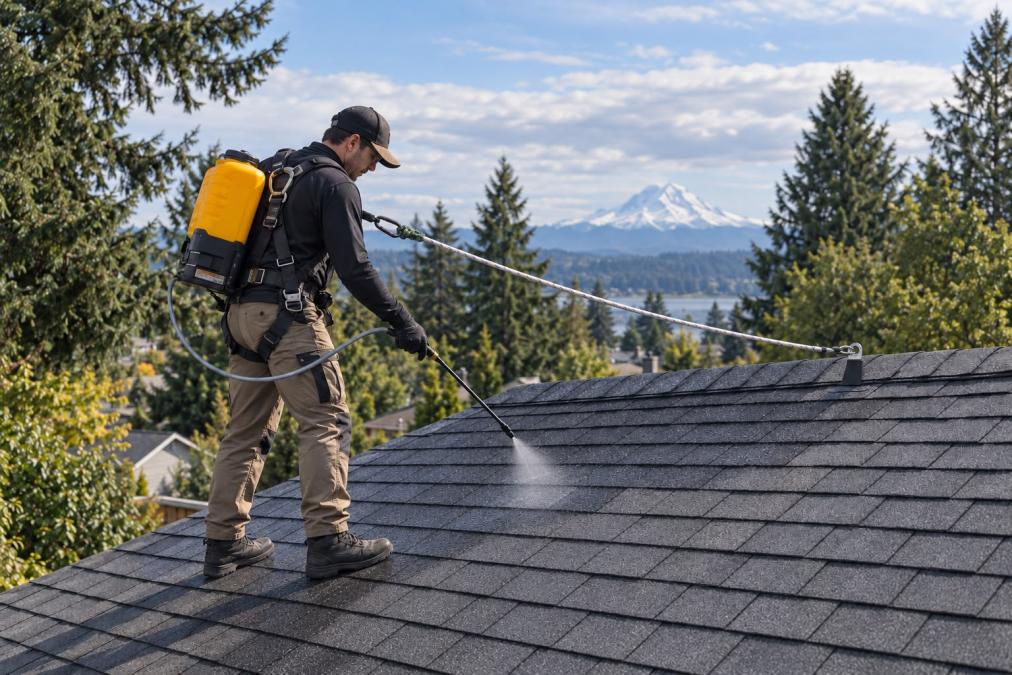
Table of Contents
- What Is a Roof Rejuvenation Service?
- Signs of Roof Aging: Is Your Roof a Candidate?
- Asphalt Shingle Rejuvenation vs. Full Replacement
- Roof Rejuvenation Cost-Benefit Analysis
- Extending Roof Life: Maintenance and Insurance Implications
- DIY vs. Professional Application Risks
- Conclusion
- Frequently Asked Questions
Last Updated: September 14, 2026
What Is a Roof Rejuvenation Service?
A roof rejuvenation service applies a field-applied treatment to aging asphalt shingles whose visible surfaces remain intact and suitable for application. Apex Contracting uses HydraSoy, a soy-based formula that the manufacturer describes as being designed to penetrate weathered asphalt shingles, replenish oils, support flexibility and granule adhesion, and reduce moisture permeability.
These are the product manufacturer’s intended benefits, not guaranteed outcomes. Actual results vary according to the shingles’ starting condition, installation, age, ventilation, previous maintenance, climate, and environmental exposure. No treatment can guarantee a specific extension of roof life.
Roof rejuvenation is not a roof repair, waterproofing service, formal inspection, roof certification, or substitute for replacement. It cannot correct active leaks, missing or severely damaged shingles, failed flashing, exposed shingle mat, soft decking, rot, or structural problems.
HydraSoy is intended for asphalt-shingle roofs that meet its product requirements. It should not be applied when visible conditions or known defects indicate that repair, replacement, or additional professional evaluation is needed first.
Before authorizing any aftermarket roof treatment, homeowners should review the original shingle manufacturer’s guidance and applicable warranty terms. Manufacturer recommendations and warranty requirements vary. Apex Contracting does not determine whether a treatment affects an existing manufacturer warranty.
Learn how HydraSoy describes its roof-rejuvenation treatment.
How the Treatment Works
The service begins with a limited pre-application review of accessible shingles and readily visible roof conditions. This review is performed only for service planning and product-suitability purposes. It is not a formal roof inspection, leak investigation, structural evaluation, code-compliance review, warranty determination, roof certification, or estimate of remaining service life.
Known leaks, previous damage, missing shingles, or other roofing concerns should be disclosed before service. When visible conditions or disclosed concerns fall outside the treatment scope, repairs or additional evaluation may be recommended before an application proceeds.
When the roof appears suitable for treatment, loose debris is removed as necessary and any separately authorized preparation or repair work is completed. Landscaping, siding, windows, vehicles, and other surrounding surfaces are protected as appropriate for the property.
HydraSoy is mixed and applied according to the manufacturer’s current instructions. The treatment is distributed across qualifying asphalt shingles using controlled spray equipment and is allowed to penetrate the shingle surface. Application conditions, coverage, wind, temperature, precipitation, runoff, and property protection must all be considered during service.
The completed application is documented with service records and photographs when included. Documentation confirms what work was performed; it does not certify the roof’s condition or guarantee future performance.
Signs of Roof Aging: Is Your Roof a Candidate?
Roof rejuvenation is intended for certain asphalt-shingle roofs showing age-related weathering while remaining intact enough to receive treatment. Roof age alone does not determine whether application is appropriate. Installation quality, sun exposure, ventilation, drainage, previous repairs, maintenance history, and current visible conditions all matter.
A roof may be a potential candidate when:
- The roof is surfaced with compatible asphalt shingles
- The shingles generally remain flat, intact, and securely attached
- Weathering or fading is present without widespread material failure
- Granule loss is limited rather than extreme
- Minor surface checking or early edge wear is present without extensive cracking
- There are no known active leaks or ongoing moisture intrusion
- Missing or locally damaged shingles have been properly addressed
- No visible exposed shingle mat or widespread bare areas are present
- The original shingle manufacturer’s guidance and warranty terms have been considered
A roof may not be appropriate for rejuvenation when visible or known conditions include:
- Active leaks or ongoing water intrusion
- Missing, loose, torn, or extensively damaged shingles
- Severe curling, cracking, brittleness, or surface deterioration
- Exposed fiberglass mat or extreme granule loss
- Soft, rotted, or sagging decking
- Significant flashing failures
- Structural movement or a visibly uneven roofline
- Improper previous repairs that affect the roofing surface
- Conditions suggesting that repair or replacement should occur first
- Shingle-manufacturer requirements that do not permit the treatment
These signs do not independently diagnose the roof or determine its remaining service life. Fading, staining, moss, and granule loss can have different causes, and concealed defects may not be visible during a maintenance visit.
Before treatment, Apex Contracting performs a limited visual review of accessible roof surfaces to identify readily apparent conditions that could make application inappropriate. This review is used only for service planning and product suitability. It is not a formal roof inspection, roof certification, leak investigation, structural evaluation, code-compliance review, warranty determination, or estimate of remaining roof life.
Property owners should disclose known leaks, previous damage, insurance claims, repairs, or other roofing concerns before service. When those concerns exist—or when visible conditions fall outside the rejuvenation scope—repair, replacement, or evaluation by an appropriately qualified provider may be recommended before treatment proceeds.
Asphalt Shingle Rejuvenation vs. Full Replacement
Asphalt shingle rejuvenation treats the existing shingles, while full replacement removes the old roofing and installs a new roof system. The right choice depends on the roof’s present condition, the extent of any damage, the homeowner’s plans, and the cost of each option.
Rejuvenation may be appropriate for an aging asphalt-shingle roof that remains serviceable and shows primarily surface-level weathering. Replacement is generally the better choice when damage is widespread, leaks are present, shingles have substantially deteriorated, or the decking or other components of the roof system require corrective work.
Factor | Shingle Rejuvenation | Full Replacement |
|---|---|---|
Best suited for | Serviceable roof with age-related drying | Failed, extensively damaged, or severely deteriorated roof |
Tear-off required | No | Usually, depending on existing layers, project requirements, and applicable code |
Disruption | Typically one service visit | Multi-day project |
Expected result | May extend the serviceable period of qualifying shingles | Provides a new roofing system |
Relative cost | Lower upfront cost | Higher upfront cost |
Waste Generated | Minimal application waste | Roofing and other tear-off debris |
Rejuvenation can be a practical way to postpone replacement when the existing roof is still a suitable candidate. It should not be used to delay necessary repairs or replacement when the roofing system has already failed.
Material Compatibility Matrix
HydraSoy is intended for aging asphalt-shingle roofs that remain intact and meet the product’s application requirements. It should not be assumed to work with other roofing materials because their composition, installation, and maintenance requirements are different.
Roofing Material | HydraSoy Suitable? | Notes |
|---|---|---|
Asphalt shingles | Yes, depending on condition. | Intended use; suitability depends on the shingles’ condition |
Modified bitumen | Not established. | Use only with written approval from the product and roofing manufacturers. |
Wood shakes | No | Requires products and maintenance methods designed for wood roofing |
Metal roofing | No | Requires products and maintenance methods designed for metal roofing |
Tile | No | Requires products and maintenance methods designed for tile roofs |
If your roof is not made from asphalt shingles, consult the roofing-material manufacturer or a qualified contractor about maintenance products designed specifically for that roofing system. (HydraSoy product information)
Roof Rejuvenation Cost-Benefit Analysis
The primary financial comparison is rejuvenation versus full roof replacement. Replacement involves removing and disposing of the existing roofing, purchasing new materials, and completing a larger installation project. Rejuvenation treats the existing shingles without a full tear-off.
For a roof that still qualifies, rejuvenation can provide a lower upfront-cost option with less waste and disruption while postponing the larger expense of replacement. Apex Contracting also offers pay-over-time options for qualifying customers who prefer to spread out the cost.
The important limitation is that rejuvenation is a form of preventative maintenance, not a permanent alternative to replacement. On a suitable roof, treatment may help extend the shingles’ serviceable period by up to five years, but results vary according to roof condition, installation, ventilation, climate, and ongoing maintenance. It does not make an aging roof new or eliminate the eventual need for replacement.
Homeowners planning to sell should consider whether the treatment cost, anticipated ownership period, roof condition, and expectations of buyers or insurers make rejuvenation worthwhile. The most useful comparison is based on the condition of the individual roof rather than treatment and replacement costs alone.
How to Run the Numbers on Your Own Roof
Most cost comparisons treat rejuvenation and replacement as if every roof were in the same condition. A useful comparison should consider the roof itself, the cost of each option, and how long replacement may reasonably be postponed.
- Start with the roof’s current condition. Determine whether the roof appears suitable for rejuvenation or whether visible damage, active leakage, deteriorated decking, or other defects make repair or replacement the more appropriate option.
- Obtain prices for both options. Compare the complete rejuvenation price with a realistic replacement estimate for the same roof. The replacement estimate should account for tear-off, disposal, materials, labor, permits, and any known repairs.
- Calculate several possible deferral periods. Divide the rejuvenation cost by different potential deferral periods, such as three and five years, rather than assuming a guaranteed result. This provides an estimated annual cost for each possible outcome.
Example: Comparing Annualized Cost
Consider a 2,500-square-foot roof with a replacement estimate of $17,500, or $7 per square foot. Using a simplified 30-year planning period, the annualized replacement cost would be approximately $0.233 per square foot per year.
A rejuvenation treatment priced at $1.05 per square foot would cost $2,625. If the treatment postpones replacement for the full five-year period, its annualized cost would be $0.21 per square foot per year—approximately 10% less than the annualized cost of replacement.
This is an illustrative planning calculation, not a guarantee that the roof will last 30 years or that treatment will add exactly five years. It compares the cost of a potential five-year deferral period with the annualized cost of replacement.
- Compare both options over the same period. Replacement provides an entirely new roofing system, while rejuvenation is intended to postpone that larger expense. A complete comparison should include both the immediate cost of treatment and the eventual cost of replacement.
- Consider disruption and ownership plans. Replacement normally involves tear-off, disposal, noise, and several days of work. Rejuvenation is generally completed during one service visit. Homeowners should also consider how long they expect to own the property and whether buyer, inspection, or insurance requirements may affect the decision.
- Evaluate future treatment only when appropriate. Some roofs may remain suitable for another application after the manufacturer’s recommended interval, while others may require replacement. Reapplication should be based on the roof’s condition at that time rather than assumed in advance.
The goal is not to prove that rejuvenation is always less expensive. It is to determine whether postponing replacement provides reasonable value for that particular roof and homeowner.
Where Rejuvenation Wins and Where It Does Not
Scenario | Better Fit | Why |
|---|---|---|
Serviceable asphalt shingles showing age-related drying | Rejuvenation | May improve flexibility and postpone premature replacement |
Localized, repairable defect with otherwise serviceable shingles | Repair, then reassess | Treatment will not repair the defect, but the remaining roof may still qualify afterward |
Excessive widespread cracking, curling, exposed mat, or loose and missing shingles | Replacement | The shingles may be too deteriorated for rejuvenation to provide reasonable value |
Soft, rotted, or sagging decking | Repair or replacement | The underlying roof system requires corrective work |
Short expected ownership period | Compare both options | Treatment cost, buyer expectations, inspection findings, and insurance requirements may affect the value |
Long-term ownership | Compare both options | Rejuvenation may postpone replacement, while replacement provides an entirely new roofing system |
Limited immediate budget and a qualifying roof | Rejuvenation may fit | Lower upfront cost and pay-over-time options may make maintenance more manageable |
Treatment is not approved by the shingle manufacturer | Do not apply | Warranty terms and product compatibility should be confirmed before treatment |
Rejuvenation does not automatically make financial sense for every aging roof. The comparison should be based on the roof’s observable condition, the extent of any necessary repairs, and the realistic cost of treatment versus replacement—not an exact prediction of how many years the roof has left.
Extending Roof Life: Maintenance and Insurance Implications
Roof rejuvenation works best as part of an ongoing preventative-maintenance plan. Keeping gutters clear, controlling moss, correcting minor defects promptly, and monitoring changes in the shingles can help reduce avoidable deterioration.
Keep invoices, application records, photographs, repair documentation, and any product-guarantee information with the property records. This documentation may help demonstrate that the roof has been maintained, but it does not guarantee insurance coverage, claim approval, roof certification, or acceptance by a future buyer.
A 10-Year Maintenance Roadmap
Rejuvenation is one part of a longer roof-maintenance plan. The appropriate schedule will vary according to climate, tree coverage, roof design, drainage, ventilation, and the condition of the shingles.
Years 1–2: Protect and monitor the roof.
- Visually check the roof after severe storms and during seasonal maintenance
- Clear gutters and downspouts at least twice each year
- Remove accumulated leaves, branches, and other debris
- Have moss or vegetation addressed before growth becomes established
- Keep records of treatments, observations, and repairs
Years 3–5: Reassess the roof’s condition.
- Arrange periodic reviews for changes in granule loss, curling, cracking, or attachment
- Watch for granules collecting in gutters and at downspout outlets
- Address visible flashing, sealant, or penetration problems promptly
- Check the manufacturer’s recommended interval and determine whether the roof remains suitable for another treatment
Years 6–10: Continue maintenance and plan ahead.
- Continue routine roof, gutter, and drainage maintenance
- Reevaluate the roof after major storms or whenever leaks or visible damage appear
- Determine whether continued maintenance, localized repairs, another qualifying treatment, or replacement is the most appropriate next step
- Update replacement planning and budgeting as the roofing system continues to age
A maintenance schedule cannot guarantee a specific roof lifespan, but consistent care makes it easier to identify developing problems before they become larger and more expensive.
How Insurers View a Treated Roof
Insurance companies do not follow one universal policy for roof-rejuvenation treatments. A carrier may consider the roof’s original installation date, material, visible condition, maintenance history, previous claims, and its own underwriting requirements.
Rejuvenation does not reset the roof’s age or automatically qualify it for coverage, renewal, a lower premium, or replacement-cost coverage. If a policy settles roof damage at actual cash value, age-related depreciation may still apply. The Washington Office of the Insurance Commissioner explains that actual cash value generally means the cost to repair or replace damaged property minus depreciation. (Washington Office of the Insurance Commissioner)
Before treatment, homeowners may want to ask their insurance agent whether an aftermarket roof treatment affects underwriting, renewal, or claim requirements under their specific policy. When possible, request the answer in writing.
Keep the service invoice, before-and-after photographs, product information, application date, contractor information, and records of subsequent maintenance. These documents establish what work was performed, but the insurance company will still make its own coverage and claim decisions under the policy.
What Buyers and Sellers Should Know
A documented roof-rejuvenation treatment may show prospective buyers that preventative maintenance has been performed, but it should be described accurately. Rejuvenation is not a new roof, a roof certification, or a guarantee of a specific remaining lifespan.
Sellers should retain the service invoice, application date, product information, before-and-after photographs, and records of any repairs or later maintenance. Known leaks, damage, or other defects should be addressed and disclosed appropriately rather than treated as conditions corrected by rejuvenation.
Buyers should review the treatment records alongside the roof’s age, visible condition, inspection findings, and insurance requirements. They may also wish to confirm whether any manufacturer or product guarantee transfers with the property.
A buyer, inspector, lender, or insurance company may still request additional evaluation, repairs, or replacement based on its own requirements. The purpose of the documentation is to accurately show what maintenance was completed—not to replace an independent assessment of the roofing system.
DIY vs. Professional Application Risks
Roof rejuvenation may appear straightforward because the product is applied with spray equipment, but the work involves more than distributing liquid across the shingles. Accessing a roof creates a serious fall hazard, and walking on aging shingles can loosen granules or damage brittle areas.
The product must also be mixed and applied at the correct ratio and coverage rate. Applying too little may produce uneven treatment, while excessive application can create unnecessary runoff and increase the risk of overspray reaching siding, windows, vehicles, landscaping, or neighboring property. Weather, wind, roof pitch, drainage, and surface condition must all be considered before application begins.
A professional application should include a suitability review, preparation of the work area, protection of surrounding surfaces, controlled application, and documentation of the completed service. HydraSoy provides product-specific mixing and application instructions, while the person performing the work remains responsible for proper preparation, application, property protection, and safety practices. (HydraSoy product information)
The value of professional service is not simply the spraying itself. It is knowing when treatment is appropriate, applying the correct amount consistently, protecting the property, and recognizing visible conditions that should be repaired or evaluated before treatment.
Conclusion
Roof rejuvenation can be a practical preventative-maintenance option for aging asphalt shingles that remain intact and serviceable. By treating the existing shingles instead of immediately tearing them off, homeowners may be able to postpone replacement, reduce short-term costs, and avoid the disruption and waste associated with a full roofing project.
The condition of the roof is what determines whether rejuvenation makes sense. Active leaks, severely damaged shingles, deteriorated decking, and significant flashing problems must be repaired or otherwise addressed. Rejuvenation cannot correct those conditions, but it may provide meaningful value when age-related drying is the primary concern.
Apex Contracting provides HydraSoy roof-rejuvenation services with careful preparation, controlled application, and clear documentation. Apex Contracting is licensed through the Oregon CCB, registered with Washington L&I, bonded, and insured. We provide honest recommendations based on visible conditions and the agreed service scope.
Frequently Asked Questions
Does roof rejuvenation actually work?
Roof rejuvenation can benefit the right asphalt-shingle roof. HydraSoy is designed to penetrate weathered asphalt shingles, replenish lost oils, improve flexibility and granule adhesion, and reduce moisture permeability. Results depend on the shingles’ condition, installation, ventilation, climate, and continued maintenance. The treatment cannot repair active leaks, exposed shingle mat, deteriorated decking, or severely damaged shingles.
How much does it cost to rejuvenate a roof?
Pricing depends on the roof’s size, pitch, accessibility, condition, preparation requirements, and the amount of treatment needed. Rejuvenation generally costs substantially less upfront than full replacement because it does not require tear-off, disposal, and installation of an entirely new roofing system. Contact Apex Contracting for a quote based on your specific roof. Pay-over-time options are available for qualifying customers.
Does roof rejuvenation affect my manufacturer's warranty?
It may. Product compatibility and warranty terms vary among shingle manufacturers, and some manufacturers may not permit aftermarket treatments. Homeowners should review their warranty documents and contact the original shingle manufacturer or warranty administrator before authorizing treatment. The shingle manufacturer—not the rejuvenation contractor—determines whether a particular treatment affects existing warranty coverage.
How long does a roof rejuvenation treatment last?
On a qualifying roof, treatment is intended to provide benefits for up to five years. This is not a guarantee that every application will add five years to the roof’s lifespan. Performance depends on the shingles’ starting condition, weather exposure, ventilation, installation, and subsequent maintenance. At the end of the treatment period, the roof should be reassessed to determine whether continued maintenance, another qualifying application, repairs, or replacement is appropriate.